


The Zinger Stinger Recipe - my favourite morning potion

Updated: May 20
To start the day, I have my highly anti-inflammatory, antioxidant and antiviral morning potion, make sure that it's not hot because anything above 37 degrees or body temperature will not enable the lemon juice to detox and flush your organs properly,
One word of caution: Make sure that you rinse your mouth with filtered water immediately after drinking the lemon juice to protect your enamel.

The Zinger Stinger
A fiery anti-inflammatory vitality drink designed to support digestion, circulation, gut health, hydration, collagen production, muscle recovery and immune resilience.
It combines ginger, turmeric, lemon, herbs, prebiotic fibre, minerals, protein, collagen and creatine into one functional daily tonic.
Ingredients
Herbal Concentrate
1 lemon, juice plus chopped peel from ½ lemon
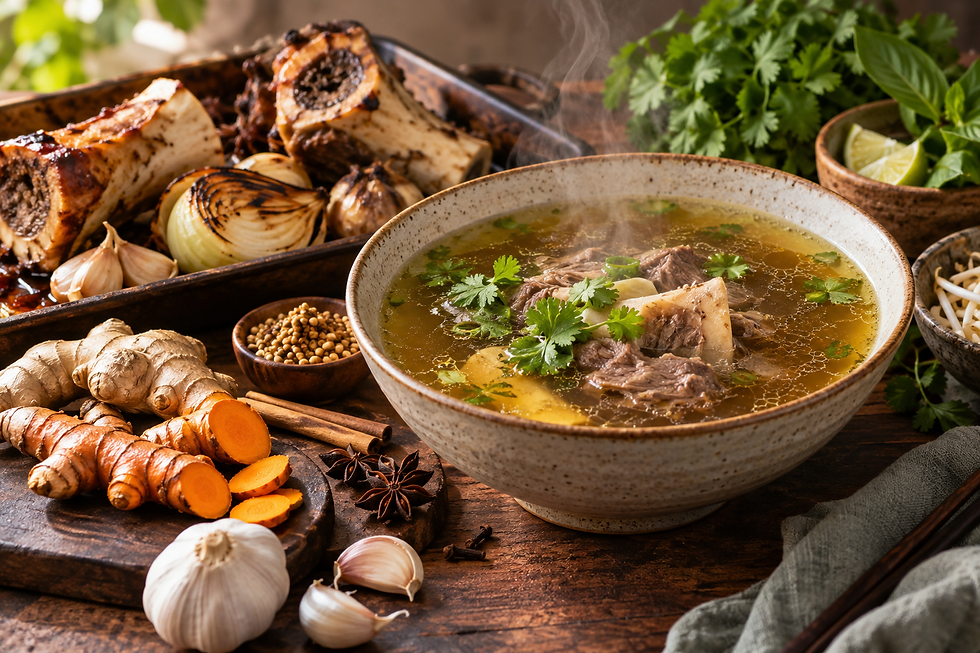
1 inch fresh turmeric, chopped
2 handfuls / approx. 60 g fresh ginger, chopped
Pinch of ground black pepper
4 sprigs fresh thyme
1 sprig fresh rosemary
Pinch of sage
Pinch of oregano
6 cloves
2 star anise
2 tbsp hibiscus
1 tsp cayenne pepper
25 ml aloe vera juice
2 tbsp inulin
To Finish
Use 2 cups of the cooled ginger, turmeric, herb and black pepper tea, then add:
1 tsp raw unpasteurised honey
1 tsp Baja Gold salt or mineral-rich sea salt
30 g whey protein powder
20 g hydrolysed grass-fed bovine collagen peptides
10 g creatine
Optional Add-Ins
Soursop / graviola extract with Irish sea moss
MSM
Moringa
Black seed oil
Mullein extract
Bitter gourd powder
Chlorophyll with spearmint oil
1/4 cup hibucus kefir
1/4 cup ginger kefir
1/4 cup kombucha
These are optional boosters rather than essential parts of the core recipe.
Method
Pre-boil the chopped ginger, turmeric, black pepper, thyme, rosemary, sage, oregano, cloves, star anise and hibiscus in water for around 20 minutes.
Let the tea cool to room temperature. Alternatively, add cold filtered water to cool it more quickly.
The same herbs and spices can be boiled once more for a second batch.
Soak the lemon in filtered water with baking soda for around 30 minutes, especially if using the peel. Rinse thoroughly with filtered water.
Cut the lemon in half. Juice the lemon, then finely chop the peel from half of it.
Add the lemon juice, chopped lemon peel, aloe vera juice, inulin and cooled herbal tea to a blender or shaker.
Stir in the raw honey with a ceramic or wooden spoon.
Add the whey protein, collagen peptides, creatine and mineral salt once the liquid is cool, not boiling, to protect texture and preserve heat-sensitive ingredients.
Blend or shake well.
Ingredient Rationale
Lemon
Lemon provides vitamin C, organic acids and polyphenols that support hydration, digestion and antioxidant defence. Using a small amount of the peel adds extra citrus flavonoids and aromatic compounds. Vitamin C also supports normal collagen formation, making lemon a useful partner for the collagen peptides in the recipe.
A more accurate claim is that lemon supports liver function and hydration as part of a healthy diet. It does not “detox” the body on its own; the liver and kidneys do that continuously.
Fresh Ginger
Ginger is one of the central anti-inflammatory ingredients in this drink. Its active compounds, including gingerols and shogaols, have been studied for effects on inflammation, digestion, nausea, blood sugar regulation and lipid markers. Ginger also gives the Zinger Stinger its heat, circulation-supporting feel and digestive stimulation.
Fresh Turmeric
Turmeric contains curcumin, a plant compound studied for its antioxidant and anti-inflammatory properties. Curcumin is not very well absorbed on its own, which is why this recipe includes black pepper. Turmeric gives the drink its golden colour and its deeper anti-inflammatory profile.
Black Pepper
Black pepper contains piperine, which can increase the bioavailability of curcumin from turmeric. This is why even a pinch is useful. It turns turmeric from a nice spice into a more functionally useful ingredient.
Thyme, Rosemary, Oregano and Sage
These Mediterranean herbs contain aromatic plant compounds with antioxidant and antimicrobial properties. They also bring a savoury, medicinal depth to the drink and work well alongside ginger, turmeric and lemon. Rosemary in particular has been studied for antioxidant and antimicrobial activity, while thyme, oregano and sage are traditionally used to support respiratory and digestive health.
Cloves
Cloves are rich in eugenol, a plant compound studied for antioxidant and antimicrobial activity. They add warmth, depth and a slightly numbing spiced quality to the drink. Because cloves are potent, a small amount is enough.
Star Anise
Star anise adds a sweet, liquorice-like flavour and traditional digestive support. It also helps soften the sharpness of ginger, turmeric, lemon and cayenne.
Use culinary star anise from a reputable food supplier, as Japanese star anise is not safe for consumption.
Hibiscus
Hibiscus adds a tart, cranberry-like flavour and is rich in anthocyanins and polyphenols. It has been studied for potential blood-pressure-supporting effects, particularly in people with raised blood pressure. Anyone already on blood pressure medication or prone to low blood pressure should use hibiscus carefully.
Cayenne Pepper
Cayenne contains capsaicin, the compound responsible for its heat. It may support circulation, thermogenesis and digestive stimulation. However, it should be used carefully, especially by people with reflux, gastritis, ulcers, blood-thinning medication or very sensitive digestion.
Important correction: cayenne should not be described as a proven emergency treatment for heart attacks or internal bleeding. Chest pain or suspected heart attack requires emergency medical help immediately.
Aloe Vera Juice
Aloe vera juice can be soothing for some people’s digestion and hydration, but quality matters. Use inner-leaf, food-grade aloe vera juice rather than aloe latex or whole-leaf extracts, which may cause cramps, diarrhoea or more serious safety concerns.
Inulin
Inulin is a soluble prebiotic fibre, often extracted from chicory root. It feeds beneficial gut bacteria and supports the production of short-chain fatty acids, which are linked to gut barrier function, metabolic health and immune signalling. It can also slow glucose absorption when taken with food. Start with a smaller dose if you are sensitive to fibre, as too much inulin can cause bloating or gas.
Raw Honey
Raw honey provides natural sweetness, trace enzymes and polyphenols. It can make the drink more palatable and may be gentler than refined sugar in small amounts, but it is still a sugar source. It should not be described as blood-sugar neutral. Use modestly, especially for anyone managing blood sugar issues.
Mineral Salt / Baja Gold Salt
Mineral-rich salt adds electrolytes and helps the drink function as a hydration tonic rather than just a herbal tea. Sodium supports fluid balance, nerve signalling and muscle contraction. Trace minerals may vary depending on the salt source, so this should be framed as mineral support, not a guaranteed high-magnesium or high-potassium treatment.
Whey Protein
Whey protein provides complete amino acids, including leucine, which supports muscle protein synthesis. Adding whey turns the Zinger Stinger from a spicy tonic into a more substantial recovery drink, especially useful after exercise or as part of a high-protein vitality routine.
Collagen Peptides
Hydrolysed collagen peptides provide amino acids such as glycine, proline and hydroxyproline, which are building blocks for connective tissue. Collagen is not a complete protein like whey, but it can be useful for skin, joints, tendons and tissue support when combined with vitamin C from lemon.
Creatine
Creatine supports the phosphocreatine system, helping regenerate ATP, the body’s quick energy currency. It is best known for supporting strength, power and muscle performance, but it is also increasingly discussed for brain energy and healthy ageing. A 10 g dose is on the higher side and may cause digestive upset in some people; 3–5 g daily is the common maintenance dose for many adults.
Overall Benefits
The Zinger Stinger is designed as a multi-layered vitality drink.
At the digestive level, ginger, lemon, aloe vera, herbs and inulin support gut comfort, digestive stimulation and microbiome nourishment.
At the inflammatory level, turmeric, ginger, rosemary, oregano, cloves, hibiscus and cayenne provide a broad spectrum of plant compounds associated with antioxidant and anti-inflammatory activity.
At the hydration level, lemon, aloe vera, mineral salt and water help replenish fluid and electrolytes.
At the recovery level, whey protein, collagen and creatine support muscle repair, connective tissue, strength and cellular energy.
At the immune-support level, the herbs, spices, vitamin C, prebiotic fibre and polyphenols create a strong plant-based foundation for resilience.
This is not a “cure” or emergency remedy. It is best presented as a functional anti-inflammatory tonic that supports the body’s natural systems: digestion, hydration, circulation, recovery, gut health and everyday vitality.
Safety Notes
Avoid or modify this recipe if you are pregnant, breastfeeding, on blood thinners, taking blood pressure medication, taking diabetes medication, prone to reflux, sensitive to spicy foods, or managing kidney disease.
Hibiscus may lower blood pressure.
Cayenne may aggravate reflux or gastritis.
Aloe latex and whole-leaf aloe extracts should be avoided.
Inulin can cause bloating if introduced too quickly.
Creatine and protein powders should be used thoughtfully if there are kidney concerns.
Anyone with a medical condition or on medication should check with a qualified healthcare professional before using this daily.
References
Anh, N. H. et al. “Ginger on Human Health: A Comprehensive Systematic Review.” Nutrients, 2020.
Prasad, S. et al. “Recent Developments in Delivery, Bioavailability, Absorption and Metabolism of Curcumin.” Molecules, 2014.
Blanton, C. et al. “Effect of Pepper on Curcumin Bioavailability.” Nutrients, 2023.
Qin, Y. Q. et al. “Inulin: Properties and Health Benefits.” Food & Function, 2023.
Hughes, R. L. et al. “The Prebiotic Potential of Inulin-Type Fructans.” Nutrients, 2021.
National Center for Complementary and Integrative Health. “Aloe Vera: Usefulness and Safety.”
Ellis, L. R. et al. “Effects of Hibiscus sabdariffa on Blood Pressure: A Systematic Review and Meta-analysis.” Nutrition Reviews, 2022.
Cortés-Rojas, D. F. et al. “Clove: A Precious Spice.” Asian Pacific Journal of Tropical Biomedicine, 2014.
Nieto, G. et al. “Antioxidant and Antimicrobial Properties of Rosemary.” Medicines, 2018.
Parham, S. et al. “Antioxidant, Antimicrobial and Antiviral Properties of Herbal Materials.” Antibiotics, 2020.

Comments