


Osteoporosis & Menopause: How to Protect Your Bones Before — and After — Bone Loss Begins


For many women, menopause arrives with conversations about hot flushes, sleep, mood and weight.
But there is another major change happening quietly beneath the surface:
we can start losing bone.
Oestrogen plays an important role in maintaining bone. As oestrogen levels fall around menopause, bone breakdown can begin to outpace bone formation. Over the years, this can lead to osteopenia and eventually osteoporosis.
The encouraging part is that osteoporosis is not simply something you have to accept.
And even if you've already been diagnosed, it is absolutely not too late to take action.
Nutrition, resistance training, appropriate impact exercise, maintaining muscle, vitamin D, adequate calcium, reducing fall risk and — where appropriate — HRT or osteoporosis medication can all make an enormous difference.
First: What Actually Is Osteoporosis?
Our bones aren't dead structures.
Bone is living tissue that is constantly being broken down and rebuilt.
When we are young, bone formation generally keeps pace with — or exceeds — bone breakdown. But as we age, and particularly after menopause, that balance can change.
Osteopenia means bone mineral density is lower than normal but has not reached the diagnostic threshold for osteoporosis.
Osteoporosis means bones have become sufficiently fragile that the risk of fractures is substantially increased.
The fractures we worry particularly about involve the:
hip
spine
wrist
upper arm
A hip or spinal fracture can dramatically affect mobility and independence, which is why prevention matters long before a fracture occurs.
Why Menopause Matters So Much
Oestrogen helps regulate the cells responsible for breaking down and rebuilding bone.
When oestrogen falls during the menopausal transition, bone turnover accelerates.
This means the years around menopause represent an important window for protecting bone.
And here is something women sometimes overlook:
Muscle matters almost as much as bone.
Strong muscles stimulate the skeleton, improve balance and make falls less likely.
So my approach to healthy ageing isn't simply:
“How do I prevent osteoporosis?”
It is:
“How do I preserve strong bones, strong muscles, balance and mobility for the next 30 or 40 years?”
How Do You Know Whether Your Bones Are Getting Weaker?
Osteoporosis is often called a silent condition because you usually cannot feel your bones becoming less dense.
Sometimes the first obvious sign is unfortunately a fracture.
Women with risk factors should therefore discuss fracture-risk assessment with their GP.
In the UK, clinicians commonly use FRAX, which estimates your 10-year probability of an osteoporotic fracture based on factors including age, weight, previous fractures, smoking, medications and family history.
A DEXA scan can measure bone mineral density at important sites such as the hip and spine.
If you already have osteoporosis, knowing your numbers gives you something objective to monitor.
If You Already Have Osteoporosis, Start Here
A diagnosis should trigger more than advice to “take some calcium.”
You want to understand why your bones have weakened and how high your fracture risk is.
Ask your doctor about:
your DEXA T-scores
your FRAX fracture-risk score
vitamin D status
calcium levels
thyroid function if indicated
medications that can affect bone
previous fractures
family history
menopause history
whether another medical condition may be contributing
If you've lost significant height, developed pronounced rounding of the back, or developed unexplained back pain, vertebral fractures may also need to be considered.
And if fracture risk is high, lifestyle alone may not be enough.
1. Strength Training: Perhaps the Most Important Exercise for Ageing Women
Bones respond to load.
Muscles pulling against bones provide signals that help the skeleton maintain strength.
That makes progressive resistance training enormously valuable.
Think:
squats, deadlift-type movements, lunges, step-ups, rows, presses, pulling movements, carrying weights
You don't have to become a bodybuilder.
But the weight should gradually become challenging enough that your muscles are actually adapting.
Two or three well-designed strength sessions each week can be transformative for strength and function.
If you already have significant osteoporosis, spinal fractures or other musculoskeletal problems, work with a physiotherapist or appropriately qualified trainer before beginning heavy lifting.
Technique comes before load.
2. Don't Forget Impact
Swimming and cycling are excellent cardiovascular exercises.
But because your body is supported, they provide relatively little impact loading to the skeleton.
Bones also benefit from appropriate weight-bearing impact.
Depending on your health and fracture risk, this might include:
brisk walking
climbing stairs
dancing
heel drops
jogging
small jumps
hopping
racket sports
You do not need to start jumping from boxes or doing extreme high-impact workouts.
Moderate-impact exercise is enough to provide bone stimulus for many women.
For someone with established osteoporosis, vertebral fractures, painful arthritis or poor balance, impact needs to be individualised.
3. Train Your Balance Too
A fracture requires more than weak bones.
Very often it also requires a fall.
So preventing falls is part of treating osteoporosis.
Useful activities include:
single-leg balance
heel-to-toe walking
tai chi
yoga
controlled lunges and step-ups
stability exercises
Good eyesight, appropriate footwear and keeping the home free of trip hazards become surprisingly important too.
Strong bones are wonderful.
Strong bones combined with strong muscles and excellent balance are even better.
4. Calcium: Food First
Calcium is one of the major structural minerals in bone.
UK guidance recommends at least 700 mg of calcium per day for adults, with dietary sources preferred wherever possible because calcium supplements can potentially clog up the heart.
Good sources include:
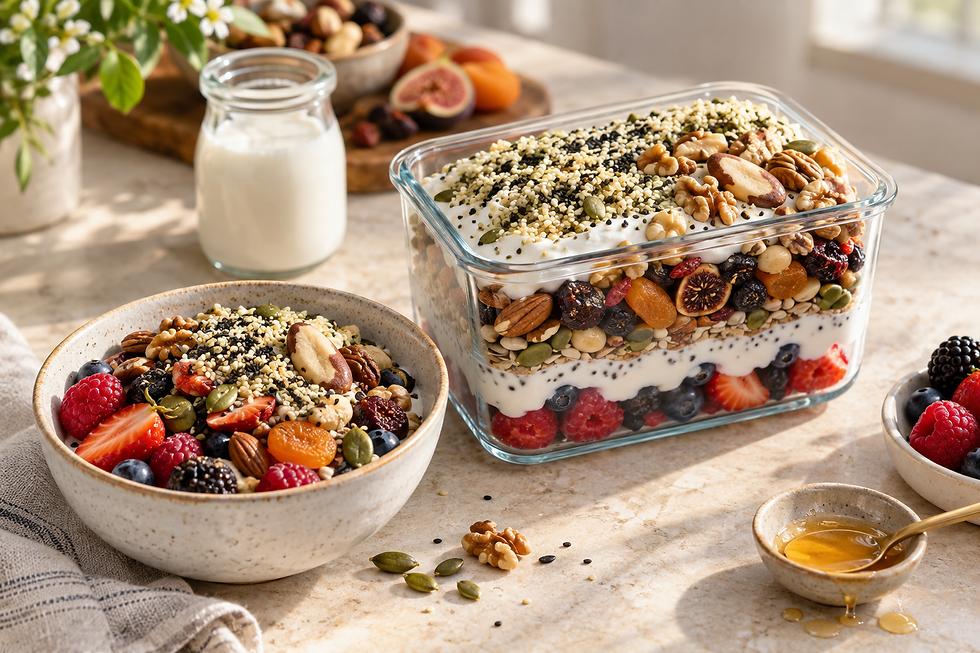
dairy yogurt
kefir
cheese
milk
calcium-fortified plant milks
sardines with edible bones
canned salmon with bones
tofu set with calcium
certain green vegetables
tahini and sesame
almonds
5. Vitamin D: Essential for Calcium Absorption
Vitamin D helps your intestine absorb calcium.In the UK, sunlight is insufficient for dependable vitamin D production for part of the year.
The NHS recommends adults consider 10 micrograms (400 IU) vitamin D daily during autumn and winter.
For people with osteoporosis who are vitamin-D deficient or considered at risk of deficiency, UK osteoporosis guidance commonly uses at least 800 IU daily.
A blood test can be particularly useful if there is concern about deficiency rather than blindly escalating the dose.
6. Protein Is a Bone Nutrient Too
We talk endlessly about calcium and almost forget protein.
But approximately half of bone by volume is a protein matrix, largely collagen, onto which minerals are deposited.
Protein is also essential for maintaining muscle — and muscle is one of your biggest forms of protection against frailty and falls.
Include high-quality protein regularly:
eggs
fish
meat
Greek yogurt
cottage cheese
kefir
legumes
tofu and tempeh
For active midlife and older adults, spreading protein across meals is often more useful than eating very little during the day followed by one enormous protein-heavy dinner.
7. What About Magnesium?
Magnesium participates in hundreds of biochemical processes and is involved in normal bone metabolism.
Good sources include:
pumpkin seeds
almonds
cashews
dark leafy vegetables
beans
whole grains
dark chocolate
I prefer food first.
A magnesium supplement can be useful when dietary intake is low or there is a particular clinical reason for taking it, but magnesium isn't a substitute for calcium, vitamin D, exercise or osteoporosis treatment.
8. What About Vitamin K2?
Vitamin K is involved in proteins associated with bone metabolism, and vitamin K2 has become an extremely popular supplement in longevity circles.
There is interesting research around vitamin K and bone health, but evidence isn't strong enough to say that every woman with osteoporosis needs a K2 supplement.
That's an important distinction.
Foods containing vitamin K include leafy greens and fermented foods.
And anyone taking warfarin or another vitamin-K-sensitive anticoagulant should not start vitamin K supplements without medical advice.
9. Creatine: Interesting for Muscle — and Possibly Useful Indirectly for Bone
Creatine isn't an osteoporosis medicine.
But I think it deserves a mention because preserving muscle becomes increasingly important after menopause.
Creatine combined with resistance training can help support muscle strength and lean mass in many adults.
That may indirectly benefit bone health by allowing women to train effectively, remain physically capable and reduce frailty.
The real power comes from:
creatine + resistance training rather than creatine sitting in a cupboard while we remain sedentary.
10. HRT and Bone Health
This is an important conversation.
Hormone replacement therapy isn't only about treating hot flushes.
Oestrogen also protects bone.
Evidence shows that HRT reduces fragility-fracture risk while it is being taken.
Current UK osteoporosis guidance considers HRT a first-line treatment option for some younger postmenopausal women — generally women aged 60 or younger with increased fracture risk and a low baseline risk of breast cancer or blood-clotting complications.
That doesn't mean every woman should take HRT.
Individual factors matter enormously, including:
age
how long it has been since menopause
personal and family cancer history
history of blood clots
cardiovascular health
whether the uterus is present
menopausal symptoms
personal preferences
But women shouldn't automatically reject HRT because they've heard that “HRT causes cancer.”
The risk-benefit picture is considerably more nuanced than that.
For an appropriate woman around menopause, bone protection may be one of several meaningful benefits.
It deserves an individual discussion with a menopause-trained clinician.
What If You Already Have Significant Osteoporosis?
This is where supplements alone can become dangerous false reassurance.
If your fracture risk is high or you've already had a fragility fracture, your doctor may recommend osteoporosis medication.
Depending on the situation, treatments can include medicines that slow bone breakdown or medicines that stimulate new bone formation.
Examples include:
Bisphosphonatessuch as alendronic acid or zoledronic acid.
Denosumabwhich reduces bone resorption.
And for some people at very high fracture risk:
bone-forming treatments such as teriparatide, romosozumab or abaloparatide may be considered.
These medicines require individual medical assessment.
And importantly, some osteoporosis treatments — particularly denosumab — should not simply be stopped abruptly without a medical plan, because fracture risk can rebound.
Lifestyle Habits That Quietly Damage Bone
Bone health isn't only about what you add.
It is also about what you remove.
Smoking
Smoking is associated with increased fracture risk.
If you smoke, stopping is one of the most meaningful health interventions you can make.
Excess alcohol
Regular excessive alcohol consumption increases fracture and fall risk.
Chronic dieting
Years of under-eating can deprive the body of protein, minerals and energy needed to maintain bone.
Being extremely thin isn't necessarily protective.
Low body weight itself can increase osteoporosis risk.
Sitting all day
Your skeleton needs mechanical stimulation.
Humans weren't designed to spend 12 hours per day in a chair.
Move.
Carry things.
Walk.
Climb stairs.
Lift.
My Bone-Strength Formula for Women Over 40
If I wanted to give a woman one simple framework, it would be this:
Lift something heavy enough to challenge you.
Put safe impact through your bones.
Eat enough protein.
Get enough calcium from real food.
Make sure you're not vitamin D-deficient.
Maintain muscle.
Train your balance.
Don't smoke.
Don't chronically starve yourself.
Discuss HRT around menopause rather than automatically fearing it.
And if you have osteoporosis, find out your actual fracture risk and treat it appropriately.
The Bigger Picture: We Should Be Building Bone Before We Lose It
Ideally, we shouldn't wait until a woman falls and breaks her hip before we start talking about bone health.
Women should be thinking about this in their 40s and 50s, while there is still enormous opportunity to preserve bone and build muscle.
Menopause isn't the beginning of physical decline. It can be the point when we become far more deliberate about maintaining the body we want to live in for the rest of our lives.
Strong legs.
Strong hips.
Strong spine.
Strong muscles.
Good balance.
And the confidence to keep moving.
The Vortex Verdict
Bone health is a long game.
There is no single magic supplement.
Calcium without exercise isn't enough.
Vitamin D without strength isn't enough.
Collagen without adequate protein isn't enough.
And lifestyle interventions shouldn't be used as an excuse to avoid medical treatment when fracture risk is genuinely high.
The most powerful strategy combines:
nutrition + muscle + loading + balance + hormones when appropriate + medical treatment when needed.
Start before menopause if you can.
Start at menopause if you haven't.
And if you've already been diagnosed with osteoporosis?
Start now.
Bones are living tissue.
Give them a reason — and the raw materials — to remain strong.
If someone already has osteoporosis with high fracture risk, supplements and exercise complement treatment but aren't necessarily substitutes for osteoporosis medication.

Comments